When replacing an aging composite wood terrace, one quickly encounters a concrete problem: manufacturers have changed their ranges between 2023 and 2024, and the boards are no longer the same. New profiles, new shades, new installation constraints.
This detail summarizes well what is happening in DIY, decor, and gardening this year: the 2024 trends are not limited to aesthetic choices; they respond to regulatory changes and practical considerations that each project imposes.
Repairability and eco-design: what regulations change for DIY in 2024
The European regulation on the eco-design of durable products (ESPR), published in the Official Journal of the European Union on June 28, 2024, paves the way for requirements on durability, repairability, and product information for many home-related categories. At the same time, the European directive on the right to repair was adopted the same year (EU Directive 2024/1799, published on June 13, 2024).
What does this mean on the ground? For us DIYers, manufacturers must make their spare parts accessible for longer. A thermostatic faucet, a window handle, a blind mechanism: we should be able to repair them instead of replacing everything. DIY stores are beginning to adapt their aisles with repair kits where previously only complete new products could be found.
The RE2020 also pushes the sector towards bio-sourced materials and low-carbon solutions. When insulating attics or redoing a lining, wood wool or cellulose wadding is gaining ground over traditional mineral wools. Feedback on this point varies among craftsmen, but the underlying trend is clear.
On the energy renovation side, the access rules for MaPrimeRénov’ have been tightened and adjusted in 2024. Individuals’ choices are changing: we are moving from isolated boiler replacements to more comprehensive renovations to access subsidies. Following the news on Brico Déco Jardin helps to stay informed about these developments that directly impact project budgets.
Interior decoration 2024: bold patterns and the return of chrome metal
We are putting up wide-striped wallpaper in an entryway, adding checked cushions on a solid color sofa: geometric patterns are making a comeback without hesitation. The common thread between the collections spotted at the Milan Design Fair and what is found in stores is the mixing of patterns on different supports in the same room.
Chrome metal and touches of transparency also mark the year. A chrome lamp base, a smoked glass shelf, a mirror framed in brushed brass: these elements bring light without weighing down the space. We are far from the total industrial look; these are individual pieces that create a contrast with warmer materials like wood or velvet.
Bright colors and DIY: two intersecting axes
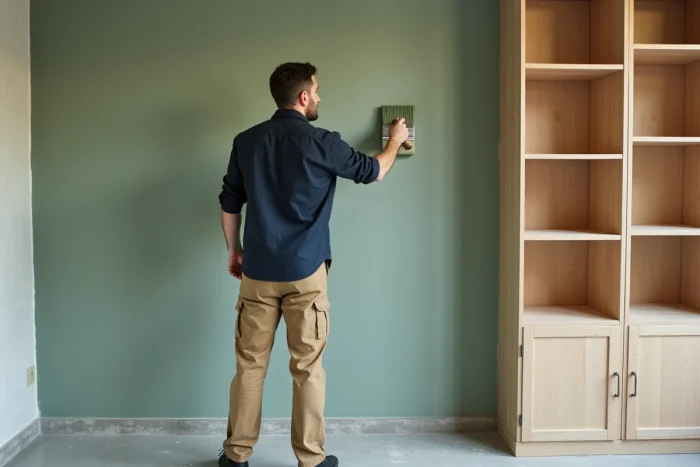
Saturated colors (deep terracotta, Klein blue, intense sage green) are invited onto a unique piece of furniture or a wall. Painting an old sideboard in a bold shade costs less than a new piece of furniture and gives a more personal result. DIY remains a strong focus in 2024, driven by tutorials on social media and the desire to control one’s decor budget.
- Repurposing a raw wood piece of furniture and staining it in a bright shade for a design effect at a lower cost
- Combining a maximum of two patterns per room (one geometric and one organic) to avoid visual overload
- Favoring matte finishes on walls and reserving gloss for metal or glass accessories
Garden layout 2024: edibles are integrated into flower beds
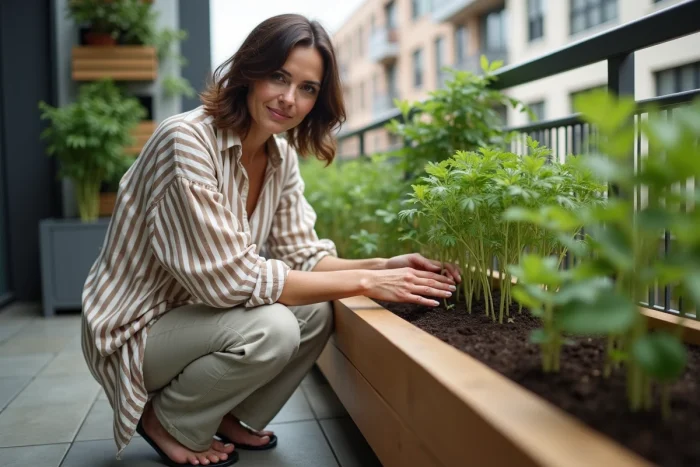
We are planting strawberry plants along pathways, herbs among perennials, a fig tree in the middle of an ornamental bed. This approach, sometimes called foodscaping, consists of integrating edible plants directly into landscaping rather than confining them to the vegetable garden.
In practice, this changes space management. A 50 m² garden that mixes flowers and vegetables requires an adapted crop rotation and a selection of compatible varieties in terms of exposure and watering. Asparagus, for example, works well at the back of a bed thanks to its airy foliage.
Water recovery and efficient watering management
With water restrictions multiplying each summer, rainwater harvesting is shifting from an ecological gesture to a practical necessity. Underground tanks or visible collectors are now integrated into outdoor design projects from the outset, not as an afterthought.
Systematic mulching, the choice of drought-resistant plants, and programmable drip irrigation systems complete the setup. We are no longer just talking about garden trends but about a sustainable change in the way we design our exteriors.
Outdoor furniture and pergola: material choices that last
Aluminum, powder-coated steel, treated autoclave wood, woven resin: the outdoor furniture market offers ranges at all price points. What distinguishes a good investment from a purchase to be renewed in three years is the resistance to UV and moisture of the finishes, not just the base material.
- Powder-coated aluminum does not rust and remains lightweight for easy movement, suitable for small spaces
- Wood (acacia, eucalyptus) requires annual maintenance but ages better than low-quality resin
- Steel is suitable for fixed structures like pergolas, provided the quality of the anti-corrosion treatment is checked
The bioclimatic pergola, with its adjustable slats, remains a sought-after product in 2024. Its installation price has not dropped much, but it significantly transforms the use of a terrace by allowing for the management of shade, light rain, and ventilation without dismantling anything.
The 2024 trends in DIY, decor, and gardening converge towards the same reflex: repair before replacing, choose durable materials, and adapt each project to local constraints. European regulations are accelerating this movement, but it is primarily the common sense of the field that guides decisions, project by project.