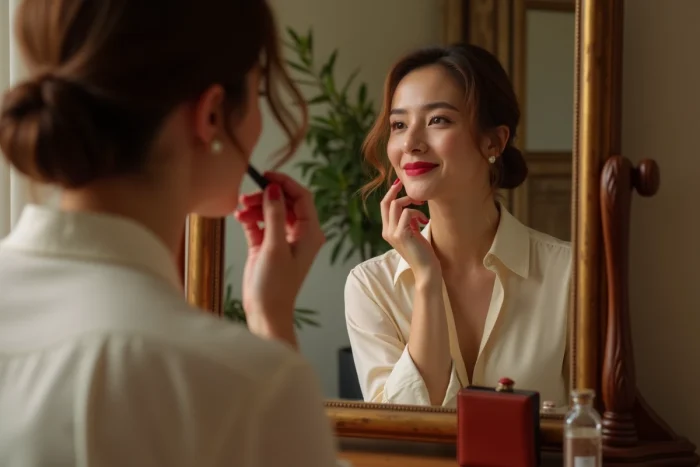
A lipstick is primarily defined by its base: waxes, oils, pigments, and, depending on the formulas, care actives. This trio of components determines the texture, longevity, and comfort on the lips. Behind the cult brands displayed prominently, there are lesser-known players who influence trends, formulations, and shade choices that ultimately prevail in the market.
Hybrid care and color formulation: what changes in a lipstick
The boundary between makeup and lip care is blurring. Several recent brands build their lipsticks around a logic of hybrid care and color product, where pigmentation remains adjustable and comfort takes precedence over coverage.
The American brand Merit exemplifies this positioning well. Its lip products focus on a sheer finish, often described as “your lips but better,” with transparency regarding the ingredients. This minimalist approach appeals to a clientele looking to simplify their makeup routine without sacrificing color.
On the French side, Les Filles en Rouje (the beauty line of Rouje, founded by Jeanne Damas) offers a creamy semi-matte texture designed to be blended with the fingers. The result gives a “bitten lip” effect, far from the ultra-pigmented finishes of luxury brands. This type of formulation has helped explore the beauty secrets of Magmoiselle and highlight alternatives to classic references.
These hybrid formulas meet a practical use: wearing color daily without a mask effect, with integrated care that prevents dryness. For dry lips, this is a more reliable criterion than price or brand prestige.
Texture and finish of lipstick: matte, satin, or glossy
The choice of texture conditions the visual result and wear over the hours. Three main families dominate the market, each with distinct technical characteristics.
- Matte finish: strong pigmentation, long wear, but tends to dry out the lips if the formula lacks moisturizing agents. New-generation mattes often incorporate lightweight oils to compensate.
- Satin finish: a compromise between coverage and comfort, with a slight sheen that adds volume. This is the most versatile texture, suitable for the majority of skin tones.
- Glossy finish: mirror effect and a feeling of nourished lips, but shorter wear. Gloss is making a comeback, worn alone or layered over a matte lipstick to modulate the effect.
The choice also depends on the context. A matte finish holds better during a long event. A satin finish is suitable for everyday wear. A glossy finish adds shine for a night out. Testing the texture on the back of the hand is not enough: the reaction on the lips (heat, pH, natural hydration) significantly alters the final appearance of the shade.
Signature shade and skin tone: choosing a lipstick that suits your face
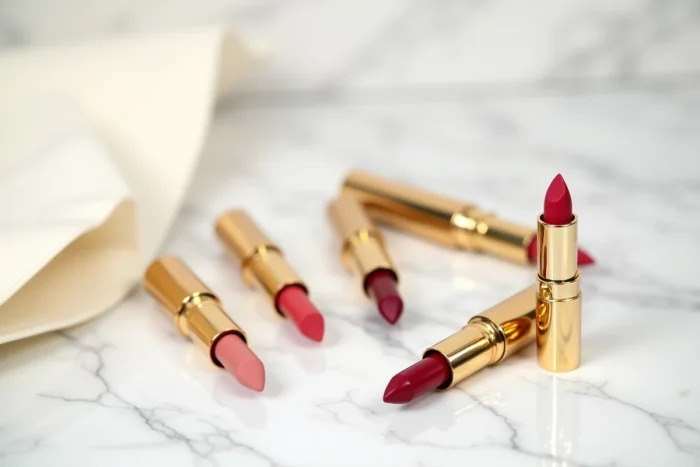
Red lipstick remains the most sought-after shade, and its status as a cultural marker is strengthening. The latest editions of the Cannes Film Festival have brought red lips back into the spotlight, with actresses like Léa Seydoux and Isabelle Huppert showcasing bold red lips on the red carpet.
This media visibility boosts sales of signature red shades at major houses. Brands adjust their ranges by offering variations of red suited to skin undertones: orangey red for warm skin, bluish red for cool skin, brick red for darker complexions.
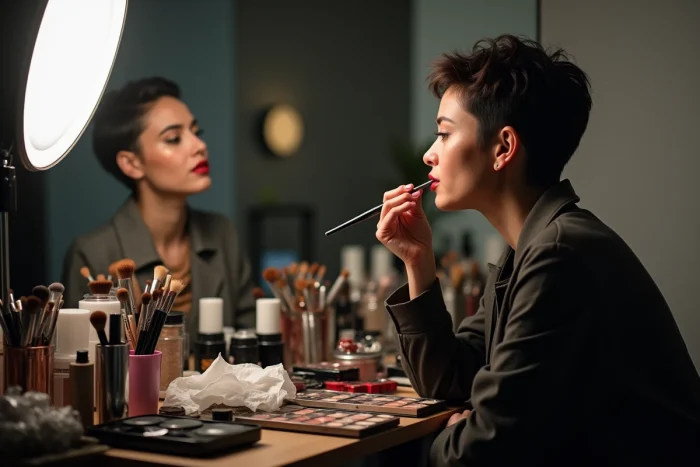
Beyond red, nude and pink shades remain safe bets. Nude does not mean “one color”: it varies according to skin tone. A nude that is too light on dark skin gives a dull effect, while a nude that is too dark on light skin ages the face.
Testing the shade in natural light remains the only reliable way to check its match with your skin tone. Artificial lighting in stores alters the perception of undertones and skews the choice.
Cult brands and discreet players in lipstick: who really prescribes trends
Rankings of lipsticks highlight the same names: Dior, Chanel, MAC, Yves Saint Laurent. These references deserve their place due to broad shade ranges, consistent formulations, and a global distribution network.
The true trendsetters often lie elsewhere. Brands like Merit or Les Filles en Rouje capture the attention of a clientele that does not identify with traditional luxury discourse. Their influence comes through social media, recommendations among users, and a positioning focused on daily use rather than brand image.
La Biosthetique, a professional brand of Franco-German origin, represents another type of discreet player. Primarily present in hair salons and institutes, it develops makeup formulas often unknown to the general public but appreciated by professional makeup artists for their wear and color palette.
This distinction between visibility and real influence matters when choosing. A lipstick from a discreet brand may offer a more refined formulation than a bestseller from a major house, simply because the marketing budget does not absorb the same share of the final price.
The lipstick market is therefore structured along two parallel axes: cult brands that ensure notoriety and availability, and niche players who evolve textures, finishes, and consumer expectations. Following both allows you to find the product that truly matches your lips, skin tone, and usage, rather than relying solely on a name on a golden case.