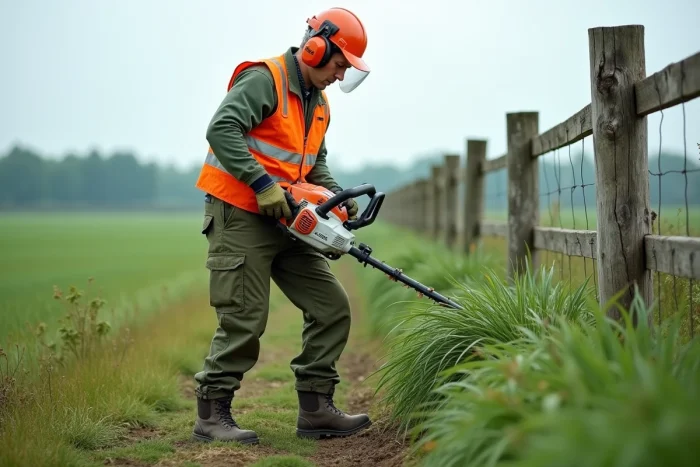
On a slope overrun with brambles or at the edge of a forest plot, you don’t choose your Stihl brushcutter by chance. The FS 261 and FS 411 meet very different needs, and choosing the wrong model means either exhausting yourself on an undersized machine or carrying unnecessary weight all day long.
Vibration constraints and working duration: the criterion that no one compares
Before even looking at power, we should start with a simple question: how many hours a day does the machine run? French regulations on exposure to hand-arm vibrations (transposition of European directives, labor code) push CARSAT and OPPBTP prevention specialists to increasingly strictly monitor green space maintenance sites.
In practical terms, a more powerful machine generates more vibrations transmitted to the arms and shoulders. During short sessions, the difference between the FS 261 and FS 411 is manageable. However, during a full day of intensive brush clearing, the cumulative vibrations with the FS 411 reach regulatory daily exposure thresholds more quickly.
This link between model choice and actual working hours is rarely addressed in comparisons. You can compare a Stihl FS 261 vs FS 411 on Passion Jardin for raw technical data, but the question of vibrations deserves to be settled first.
The FS 261 is better suited for users who work several hours without team rotation. The FS 411, heavier and more vibrating, is justified when the volume of vegetation to be cleared compensates for the additional fatigue, typically in forestry work with alternating teams.
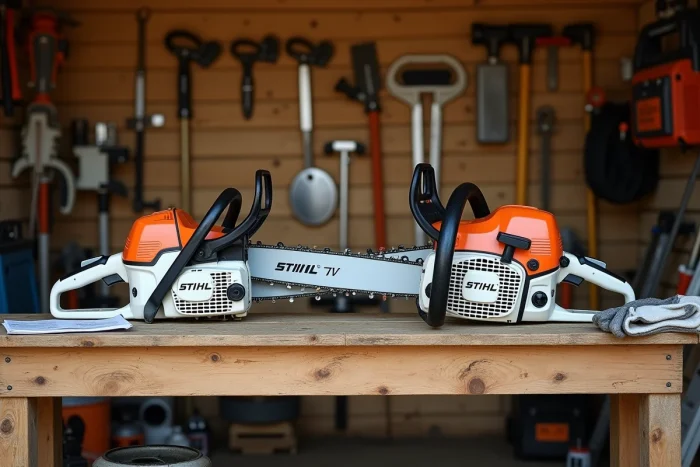
2-stroke stratified engine of the FS 261: daily consumption and torque
The FS 261 C-E features a stratified scavenging 2-stroke engine. This type of engine partially separates the fresh mixture from the burnt gases in the cylinder, which reduces fuel consumption compared to older generations of Stihl brushcutters with comparable torque.
In the field, this translates to a tank that lasts longer between refuels. When working far from a vehicle, on slopes or in hard-to-reach areas, fewer refuels mean less time wasted.
The torque of the FS 261 is sufficient for tall grasses, medium brush, and regular landscaping maintenance. It cleanly cuts through Brachypodium, dense ferns, and hazel regrowth along paths. Feedback varies on this point, but the FS 261 reaches its limits against thick woody stems or very dense vegetation over large areas.
FS 411 in forestry work: clearing seedlings and reforestation lines
The FS 411 clearly positions itself above. Stihl intends it for structured forestry work: clearing seedlings, opening reforestation lines, cleaning overgrown underbrush. Companies in the sector prefer the 400 series for this type of project, and rightly so.
The difference is felt within the first few minutes in dense vegetation. The engine provides a power reserve that prevents a drop in RPM when tackling thick brambles or chestnut shoots. The FS 411 maintains its RPM where the FS 261 requires slowing down.
The extra weight of the FS 411 is the direct downside of this power. It can be partially compensated with a well-adjusted forestry harness, but on steep terrain, the weight difference is felt after a few hours. This is a tool designed for equipped professionals, not for an individual clearing their land twice a year.
What cutting tool to mount on each model
The choice of blade or line depends as much on the model as on the type of vegetation targeted:
- On the FS 261, a nylon line head is suitable for regular maintenance (grasses, herbaceous plants). A 3-tooth grass knife works well for moderate brush without straining the engine.
- On the FS 411, a brush knife or reinforced grass blade is more naturally mounted, capable of cutting woody stems without slowing the machine.
- In both cases, matching the line diameter or blade type to the engine prevents premature wear of the clutch and angle drive.
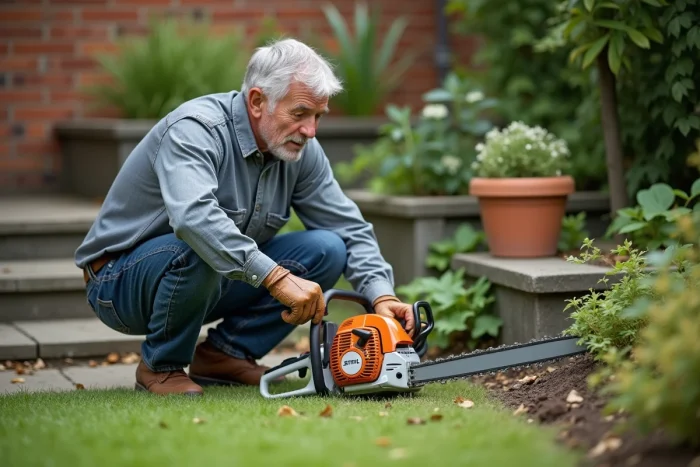
Maintenance and long-term reliability: FS 261 vs FS 411
Both models share the classic Stihl design: accessible air filter, easy-to-change spark plug, and regular monitoring of angle drive lubrication. The difference lies in the intensity of use.
The FS 261, less mechanically stressed when used within its intended range, requires less frequent maintenance. Cleaning the filter, checking the tightening of the cutting head, and replacing the spark plug once per season is sufficient in most cases.
The FS 411, used in forestry conditions, endures more dust, debris, and mechanical stress. The air filter clogs faster in forest environments, and the angle drive withstands greater forces. Expect closer monitoring, especially if the machine runs several hours a day.
Summary of selection criteria
- Landscaping, regular maintenance, sessions of a few hours: the FS 261 C-E meets the need without excess weight or vibrations.
- Forestry projects, dense woody vegetation, rotating teams: the FS 411 provides the necessary power reserve.
- Budget: the price difference between the two models is justified only if the additional power of the FS 411 is truly utilized.
The right choice between these two Stihl brushcutters relies less on the technical sheet than on the actual terrain and daily working time. A well-used FS 261 in its domain will last as long as an FS 411, with less fatigue for the operator.