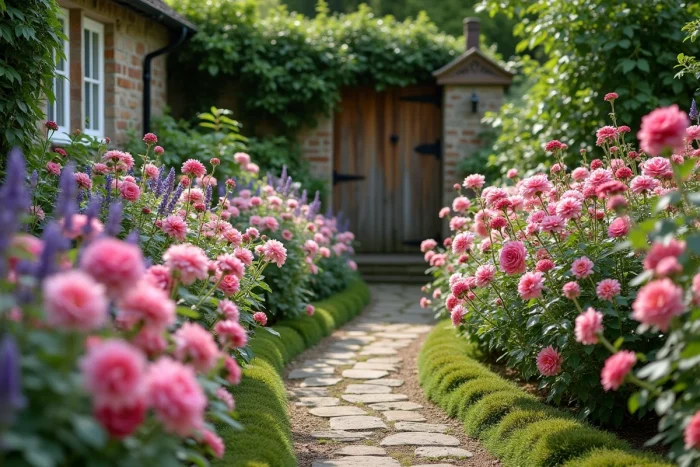
Choosing flowers for a garden that blooms year-round requires considering the watering restrictions that multiply each summer, combined with longer heat episodes. These constraints alter the actually usable plant palette. Several perennials once considered reliable are losing their dependability, while other species, long confined to the dry gardens of the south, are moving northward in France.
Water Restrictions and Blooming: What the Water Plan Changes for Ornamental Gardens
The Water Plan presented by the government on March 30, 2023, outlines a gradual tightening of ornamental watering restrictions during drought episodes. Summer prefectural orders, now almost systematic in many departments, can prohibit all non-food watering for several weeks.
For a garden meant to remain in bloom year-round, this constraint is not trivial. It effectively eliminates water-hungry plants as soon as we can no longer compensate for heat spikes. Mass phlox, delphiniums, or certain summer pansies, which require continuously cool soil, become risky bets in a large part of the territory.
Garden centers have understood this well: demand is shifting towards varieties capable of surviving a summer without regular watering. Among the flowers on Conseil au Jardin, there are indeed profiles that distinguish species based on their water needs, a criterion that has become as discriminating as exposure.
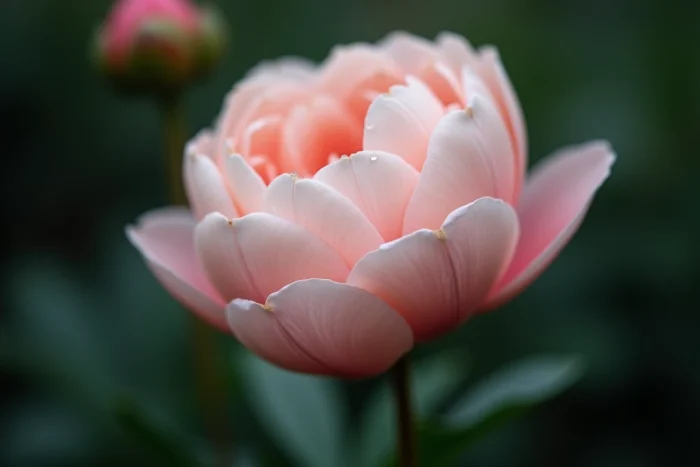
Ornamental Salvias and Echinaceas: Perennials That Withstand Repeated Heatwaves
Recent trials in French experimental stations have highlighted a marked decrease in performance of classic mass perennials under watering restriction conditions. In contrast, several species stand out for their stable blooming even under intense heat.
Ornamental salvias (Salvia nemorosa, Salvia microphylla) top the list. Their blooming extends from spring until the first frosts if the stems are cut back after the first wave. They tolerate dry, even poor soil, and require neither staking nor special treatment.
Echinaceas, once reserved for naturalistic gardens, have made their way into urban beds for the same reasons. Their long summer bloom, drought resistance, and ability to attract pollinators make them a coherent choice for those seeking a productive garden in colors without intensive watering.
- Gaura lindheimeri: continuous blooming from June to October, tolerates dry soils and missed waterings. Airy habit that lightens dense beds.
- Salvia nemorosa: upright stems in purple or white, reblooms after a hard cut in July. Hardy to well below freezing temperatures.
- Echinacea purpurea: large pink flowers with a brown cone, attracts bees and butterflies. Deciduous foliage but decorative silhouettes in winter if the dry stems are left.
- Salvia microphylla: shrubby, fragrant, with almost uninterrupted blooming in mild climates. Requires well-drained soil.
Winter and Early Spring Blooming: Plants Often Overlooked by Guides
Most articles on year-round blooming gardens focus their recommendations on the May-October period. The real challenge is to maintain visual interest between November and March, when the majority of perennials are dormant.
Hellebores bloom from December to March, sometimes under the snow. Their palette ranges from pure white to almost black purple. They prefer partial shade and a humus-rich soil, making them good companions under deciduous trees.
Winter heathers (Erica carnea) provide colorful ground cover during the coldest months. Paired with snowdrops and crocuses, they create a floral succession starting in January without any watering, as winter rains are more than sufficient.
Early bulbs deserve special attention. Daffodils and muscari, planted in autumn, require zero maintenance and naturalize year after year. A well-planted bulb bed produces flowers for a decade without any intervention.
Soil and Exposure: Two Criteria That Matter More Than Variety Choice
Even the hardiest sage will decline in waterlogged clay soil in winter. Before choosing varieties, the starting point remains the analysis of the soil and the actual sunlight exposure of each area of the garden.
A well-drained, calcareous soil will favor lavenders, salvias, and gauras. A heavy, cool soil will be better suited for asters, Japanese anemones, or astilbes. Adapting plants to the existing soil avoids most failures, much more than adding expensive fertilizers or amendments.
- Full sun (more than six hours a day): salvias, echinaceas, gauras, lavenders, landscape roses.
- Partial shade: hellebores, Japanese anemones, perennial geraniums, astilbes.
- Dry and poor soil: yarrow, sedums, nepetas, Tuscan irises.
- Cool and humus-rich soil: hostas (for foliage), ligularias, trollius.
Exposure also affects the duration of blooming. A sage planted in too shady a spot will produce elongated stems and few flowers. Conversely, a hellebore exposed to direct afternoon sun in summer will see its foliage burn.
The combination of these parameters, more than just a simple list of species, determines whether a garden will truly remain in bloom twelve months a year. Some gardeners achieve spectacular results with five or six well-placed species, where others accumulate dozens of varieties without visual continuity. A year-round blooming garden relies on planned succession, not on the quantity of plants installed.