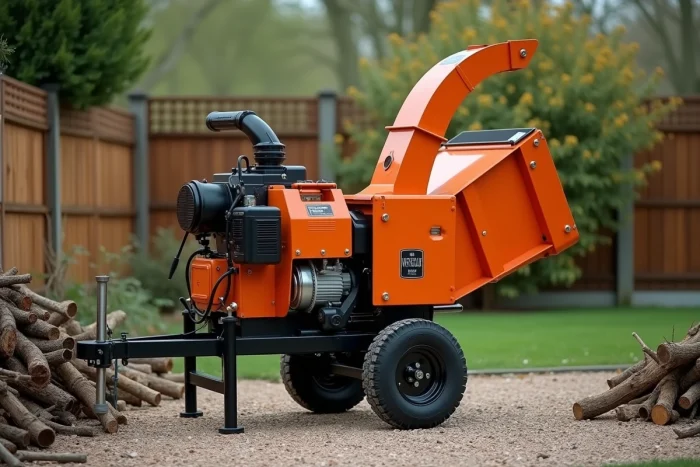
The Denqbar 5100W is a thermal garden shredder positioned in the high-power segment, accessible to both individuals and professionals. Its 7 HP motor, dual feeding zones, and ability to handle large diameter branches make it a model frequently mentioned in comparisons. The Denqbar shredder deserves a detailed examination, particularly regarding aspects that product sheets do not highlight.
Blades and wear on hard wood: what field feedback reveals
The raw power of a thermal shredder does not say much about its cutting longevity. On the Denqbar 5100W, user feedback on Amazon (Germany and France, between 2022 and 2024) indicates a notable loss of efficiency after one or two seasons on hard wood. Oak, ash, or hornbeam put much more strain on the blades than thuja or laurel.
This accelerated wear results in an increase in jams in the chute reserved for branches. The mulch becomes coarser, the throughput drops, and the device strains its motor. Sharpening or replacing the blades regularly is the only solution, but this raises another question about the availability of parts.
Before relying solely on overall ratings, reading a review of the Denqbar shredder that details mechanical behavior over time allows for anticipating these maintenance constraints.
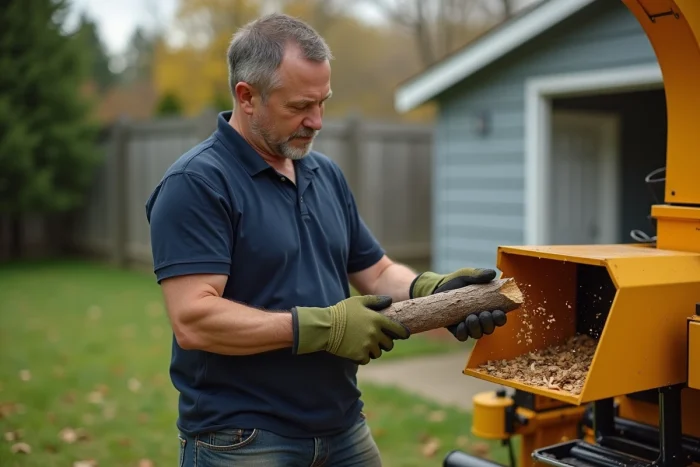
Denqbar customer service in France: parts availability and delays
Denqbar is a brand based in Germany that centralizes its support from its website denqbar.com. For a French user, this means that spare parts and after-sales service go through a cross-border circuit. Aggregated customer reviews on Trustpilot (FR and BE pages, between 2023 and 2025) report long delays for certain repairs.
The issue is not specific to the 5100W shredder: it affects the entire Denqbar range, including generators. For a thermal device that requires regular maintenance (blades, spark plug, air filter, carburetor), the responsiveness of customer service weighs in the purchasing decision as much as the technical sheet.
Anticipating wear parts
Ordering a set of replacement blades right when purchasing the shredder is a reasonable precaution. Field feedback varies on the ease of obtaining these parts in France, and a shredder immobilized in the middle of the pruning season quickly becomes a concrete problem.
Alkylate gasoline and engine maintenance of the Denqbar 5100W
A point rarely addressed in tests of thermal shredders concerns the type of fuel used. Recent manuals from Denqbar for their four-stroke engines recommend the use of alkylate gasoline. Technical sheets from Aspen and Motomix Stihl (2023-2024 versions) confirm the benefits of this fuel on small garden engines.
The concrete advantages of alkylate gasoline on a thermal shredder like the Denqbar include:
- Reduction of carburetor fouling, which decreases cleaning interventions over time
- Better cold start performance, a sensitive point for thermal shredders used in autumn or early spring
- Longer fuel preservation in the tank without degradation, useful for a device that may sit idle for several weeks between shredding sessions
The additional cost of alkylate gasoline compared to regular unleaded is real, but it is offset by a reduced maintenance frequency on the carburetor and an extended engine lifespan.
Dual feeding zone: a real gain or a marketing argument
The Denqbar 5100W features two distinct inlets: a chute for large diameter branches and a hopper for soft plant materials (leaves, hedge trimmings, small twigs). On paper, this system prevents mixing materials with very different densities.
In practice, the hopper for soft plant materials speeds up work on hedges and flower beds. Feeding a conventional shredder with handfuls of foliage mixed with fine twigs often causes jams. The separation of flows reduces this risk and produces more homogeneous mulch, which then facilitates composting or mulching.
The weak point: the absence of a collection bin
The Denqbar 5100W is delivered without a bin. The mulch falls directly to the ground or into a container that the user must provide. For a device of this power and throughput, this is a shortcoming. A collection bag or a wheelbarrow positioned under the discharge becomes a necessity within the first few minutes of use.
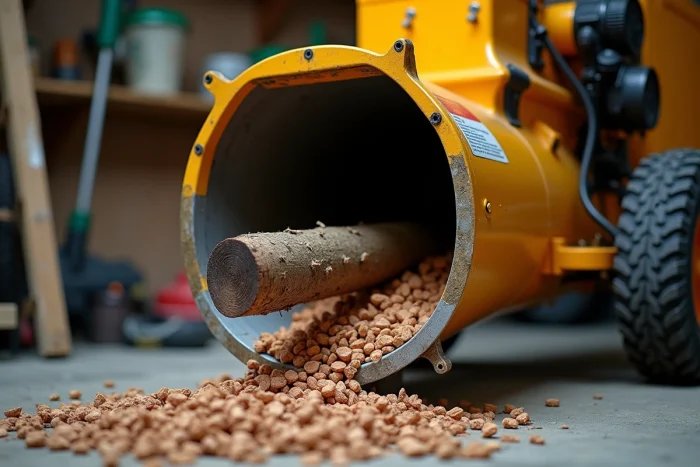
Denqbar thermal shredder or electric model: the often poorly posed criterion
The comparison between thermal and electric shredders consistently arises in searches for garden shredders. On the Denqbar 5100W, thermal motorization provides total autonomy and shredding power suitable for large diameter branches. An electric garden shredder is limited on the thickest sections and depends on an electrical outlet.
The choice is not just about power. It must include:
- The noise level, significantly higher on a thermal engine, which can be problematic in densely populated residential areas
- Mechanical maintenance (oil change, spark plug, filter, blades) versus almost no maintenance on an electric model
- The weight and bulk: a thermal shredder of this category is significantly heavier than an equivalent electric model
For a medium-sized garden primarily with hedges and a few shrubs, an electric model may suffice. The Denqbar 5100W makes sense on large properties with trees that need regular pruning or significant volumes of green waste.
The Denqbar 5100W remains a high-performing thermal shredder for pure shredding, but its purchase comes with real constraints: blade maintenance on hard wood, centralized customer service in Germany, and absence of a bin. Considering these elements before purchase avoids disappointments once the first season has passed.