
A real estate purchase commits you for several decades. The quality of the property, its price in relation to the local market, and its energy performance determine the success of the project far more than the emotional appeal felt during a first visit.
EPC and energy guzzlers: the game-changing criterion for buying
Since the gradual implementation of the Climate and Resilience law, properties classified G and then F in energy performance diagnostics are subject to rental bans. This regulatory constraint has led to a net devaluation of energy guzzlers in the resale market.
Notaries and agency networks report a longer selling period for these properties, accompanied by wider negotiation margins. In contrast, properties classified A to C sell faster, with less price discussion, especially in tight areas.
For a buyer, reading the EPC is not just about the heating bill. A poorly rated property today will be harder to resell tomorrow, unless a complete energy renovation is budgeted for right from the purchase. Before signing, it is useful to access the Immovalys site to compare available listings and filter by energy class.
- A property classified F or G often requires a significant renovation budget (insulation, heating system change, carpentry) that must be included in the financing plan.
- A property classified D may fall into a regulatory risk zone in the coming years if new restrictions are voted.
- Properties A to C offer the best value stability upon resale and the most favorable loan conditions.

Real estate prices and market cycle: buying at the right time
The interest rate context has profoundly changed the notion of a “good deal.” A price that seemed attractive in 2021 no longer holds the same meaning after the rise in interest rates that began in 2022-2023.
Several observers, including the Bank of France and networks like Century 21 or FNAIM, note a significant drop in prices in the old property market for many major cities. This decline does not always compensate for the increase in borrowing costs. The listed price does not reflect the actual cost of acquisition: you need to add the additional borrowing cost over the total loan duration.
Well-located properties and properties with defects: two distinct markets
Field reports show a two-speed market. Properties that are very well located, without work needed and correctly rated in the EPC, remain less negotiable. Their rarity maintains demand.
Properties with defects (heavy work, noise nuisances, low EPC) experience price drops and much more significant negotiations. It is in this category that there is room for maneuver for a buyer willing to invest in renovation.
Real estate search: prioritizing criteria to save time
The temptation is strong to consult listings even before defining a precise specification. This approach leads to visiting unsuitable properties and wasting time in a market where responsiveness matters.
Separating non-negotiable criteria from adjustable criteria helps structure the search. A non-negotiable criterion cannot be changed after purchase: location, land area, exposure, presence of an elevator in a multi-story building. An adjustable criterion concerns what can evolve with renovations: the kitchen, the bathroom, decoration, interior layout.
Borrowing capacity and overall budget
The budget is not limited to the purchase price. Notary fees, the cost of a potential move, renovation work to meet standards or for comfort, and condominium fees make up the overall acquisition budget. Calculating your borrowing capacity before starting visits helps avoid committing to a property that is financially inaccessible.
Banks apply a maximum debt ratio that mechanically limits the amount that can be borrowed. A personal contribution, even modest, improves loan conditions and the credibility of the file in front of sellers.
Real estate purchase offer: what can be negotiated and how
Submitting a purchase offer is not just about proposing an amount lower than the listed price. A well-argued offer based on factual elements is more likely to succeed than a simple request for a discount.
The elements that justify a negotiation are concrete:
- An unfavorable EPC, with an estimate of the necessary energy renovation costs to reach an acceptable class.
- Condominium work voted or to be planned, visible in the minutes of the general assembly.
- A price per square meter higher than recent transactions in the same neighborhood, verifiable through notarial databases.
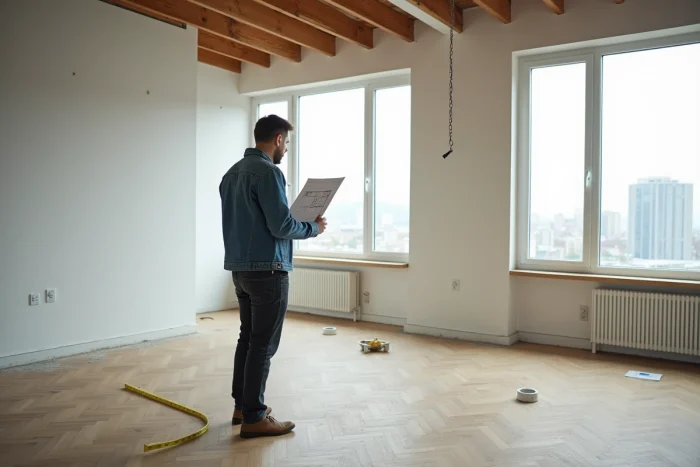
- Defects observed during the visit: humidity, outdated electrical installation, roof at the end of its life.
In a market where quality properties sell quickly, hesitating too long can cost the deal. Industry professionals recommend preparing your financing file in advance to be able to make a solid offer right after a visit, without waiting several days.
The last point to check before committing remains the coherence between the life project and the targeted property. An apartment bought to live in for five years is not evaluated the same way as a rental investment. In the first case, comfort is paramount. In the second, it is the net return after charges and taxation that decides.